Green Loans: How Smart Design Can Save You Thousands
Pina Brandi • July 23, 2025

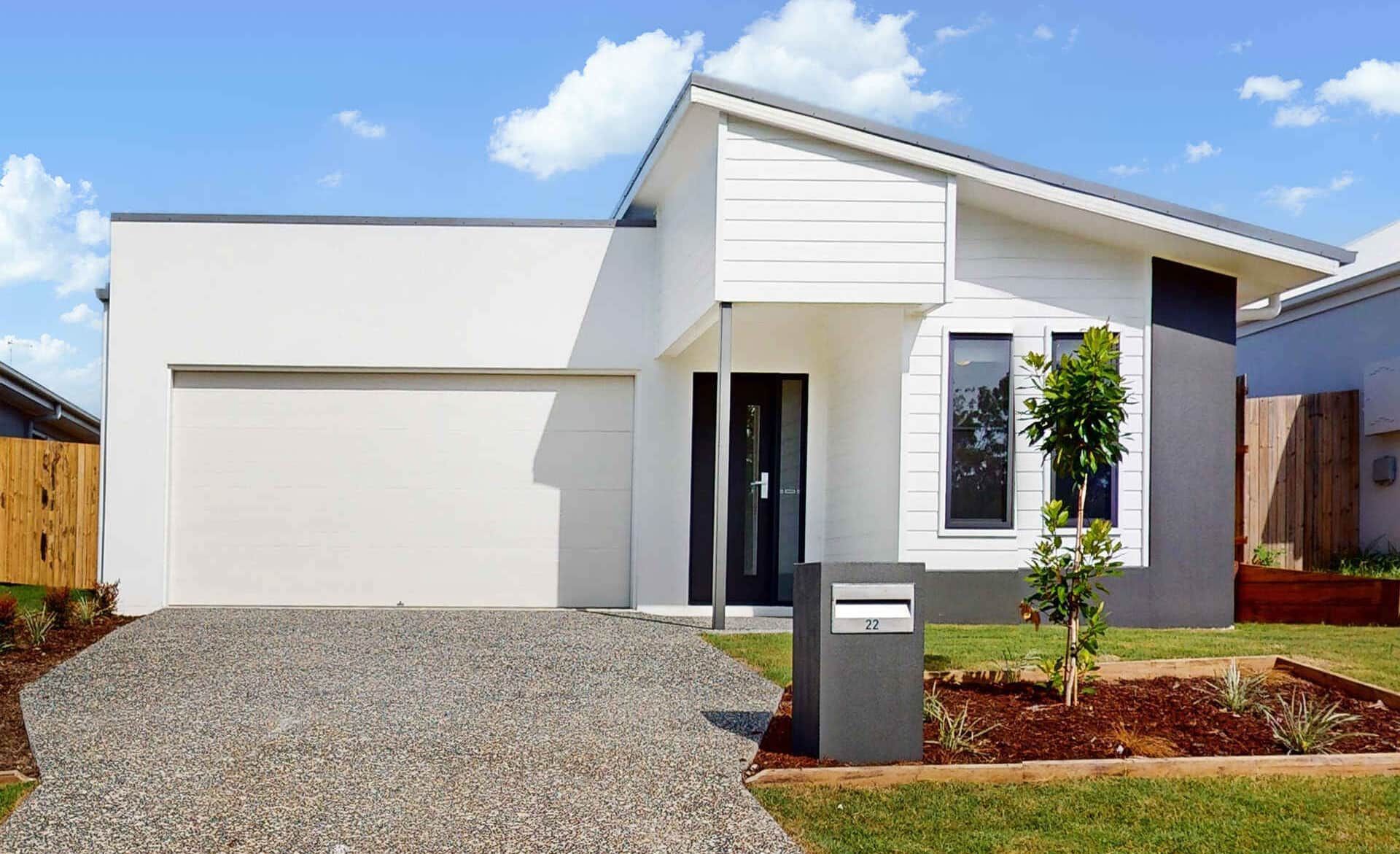
In an era where sustainability and savings go hand in hand, green home loans are making a quiet revolution in Australia’s property landscape. Whether you’re building your first home, investing in a house and land package, or upgrading an existing property, a high energy efficiency rating could translate into significant mortgage discounts.


But what’s behind this green finance movement? And how can you take advantage of it as an investor or homebuilder? Let’s break it down.


What Is a Green Home Loan?


Green loans are specially designed home loan products that reward energy-efficient building choices. Offered by many Australian lenders, they provide lower interest rates for homes that meet certain environmental standards—typically those rated highly under the Nationwide House Energy Rating Scheme (NatHERS).


With interest rates ranging from as low as 2.79% in 2025, green loans are not just good for the planet—they’re great for your budget.


What Is NatHERS?


The Nationwide House Energy Rating Scheme (NatHERS) is a government-endorsed system that measures how energy-efficient a home is. Ratings range from 0 to 10 stars, with a 7-star rating or higher often being the minimum threshold for accessing green loan discounts.


A high NatHERS rating means:

• Lower heating and cooling costs

• Reduced carbon footprint

• Enhanced long-term property value


To qualify, your home must be rated by an accredited NatHERS assessor, and the certificate must be provided to your lender.


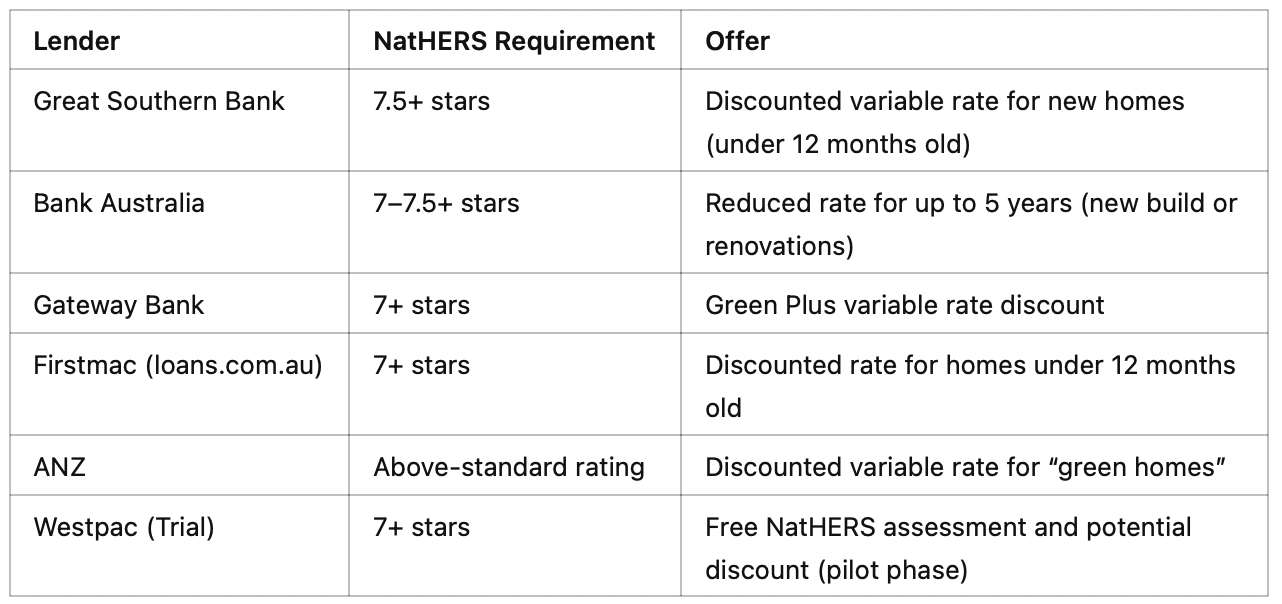
Banks Currently Offering Green Loan Discounts


More and more lenders are jumping on board. Here’s a snapshot of what some of them are offering in 2025:


Features of Green Home Loans

• Discounts of 0.05% to 0.25% below standard rates

• Typically apply to variable rate loans, though some lenders offer fixed or introductory green rates

• Can be combined with features like offset accounts, redraw, and flexible repayment options

• Some loans also apply to renovations or retrofits, not just new builds


How to Qualify for a Green Home Loan

1. Build or buy a NatHERS-rated home (7.0+ stars)

Start with energy-efficient design and materials, working with a builder who understands sustainability and NatHERS compliance.

2. Obtain a NatHERS certificate

This must come from an accredited assessor and be included in your loan application.

3. Apply with a lender offering green loan options

Submit your plans or certificate to secure the discount. For new builds, discounts are typically confirmed once construction is complete and the rating is verified.


At PB Property we recommend using a Mortgage Broker as they will be able to assist you with the best product and a more personalised approach.

We have a panel of qualified independent Mortgage Brokers that we can refer you to and make this process smooth.


Why Are Banks Offering These Discounts?


Aside from environmental responsibility, lenders have real financial motivations for offering green loan incentives:

• High-rated homes cost less to run, lowering default risk

• Higher resale value enhances loan security

• Aligns with ESG commitments and government net-zero targets


The Bottom Line: Sustainability Pays


Green home loans are not just a trend—they’re a smart financial move for investors and homeowners looking to future-proof their properties and reduce costs. With banks now actively supporting sustainable housing, the opportunity to benefit from energy-efficient design has never been greater.


How PB Property Can Help You Invest Smarter


At PB Property, we go beyond just sourcing land—we work hand-in-hand with investors to ensure their house and land packages are designed for both sustainability and financial performance.


Here’s how we can support your green investment journey:

• Connect you with expert builders who understand the NatHERS rating system and can deliver homes with 7.0–7.5+ stars

• Guide your design process to ensure compliance with lender requirements for green loans

• Maximise your financing options by helping you qualify for interest rate discounts through energy-efficient building choices

• Future-proof your investment by building homes that appeal to eco-conscious buyers and tenants, all while saving you money


Ready to Build Smarter?


Let us help you create a home that’s efficient, bank-friendly, and investment-ready.

Contact PB Property today and ask how we can help you build a NatHERS-rated home that qualifies for a green loan and sets your portfolio up for long-term growth.


share to

By Pina Brandi December 10, 2025
Around 2017–2018, growth stalls and dips modestly after APRA’s investor growth cap (2014) and interest‑only cap (2017), which is the effect you’re asking about.
By Pina Brandi December 1, 2025
Melrose Park’s transformation from an industrial precinct into a residential and mixed-use community has been a strategically significant shift for Sydney’s urban future. Historically, the area was home to pharmaceutical and light-industrial operations, but over time these industries declined, consolidated elsewhere, or simply outgrew the outdated warehouses and fragmented road layout. Keeping the land zoned industrial would have meant under-utilising a large, strategically located pocket of Sydney at a time when housing demand is at critical levels. Redeveloping Melrose Park allows Sydney to introduce thousands of new homes in an inner-suburban area without pushing growth further to the city’s outskirts. With capacity for around 10,000–11,000 dwellings, plus retail, open space, a new high school and community facilities, the precinct is envisioned as a self-contained, modern neighbourhood with liveability at its core. Instead of being an isolated residential pocket, Melrose Park is being planned as a walkable, amenity-rich town centre where green spaces, urban parks, and mixed-use buildings form a cohesive and sustainable environment. Its location is one of its strongest advantages. Positioned on the Parramatta River, the suburb sits almost exactly halfway between Sydney CBD and Parramatta CBD, making it highly attractive for commuters who want balance, convenience and lifestyle. It is minutes from major employment hubs, established transport corridors like Victoria Road, and future connections that will further integrate the precinct into Sydney’s broader network. The land parcel is also unusually large and contiguous for an inner-suburban area, enabling a full masterplan rather than piecemeal development.  Overall, the shift from industrial to residential in Melrose Park wasn’t just a rezoning exercise; it was a strategic realignment of land use to meet Sydney’s changing economic, demographic, and lifestyle needs. Its prime location ensures the precinct will continue to attract demand, support growth, and deliver long-term value for residents and investors alike.
By Pina Brandi November 29, 2025
APRA has been explicit that the DTI cap is a financial‑stability tool, but it is deliberately designed not to choke off finance for new housing supply
Show More