Melbourne Property Market just right
Pina Brandi • September 15, 2021

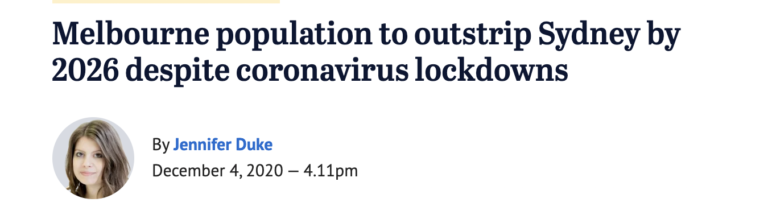
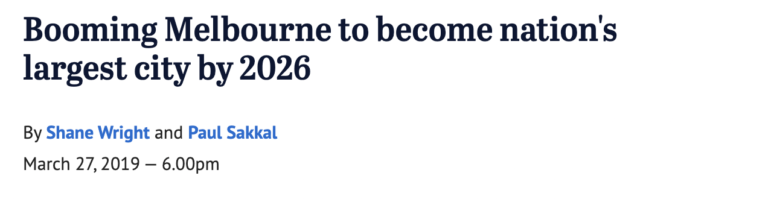
The CBD that expected to pass Sydney's population by 2026 it’s just dormant

Melbourne is a truly magnificent city in which to live, work and study.


Melbourne's inner-city atmosphere is fuelled by a creative, culturally diverse community and is globally recognised as one of the most concentrated dining and fashion cultures in the world. 

Victoria has firmly established itself as Australia’s best visitor destination, with growing demand from all over the world to experience our wealth of diverse tourism offerings prior to the coronavirus (COVID-19) pandemic.


Corelogic last reports show that due to lockdown and restrictions the amount of listing has dropped drastically and that would put even more pressure on the supply and demand system of real estate.

The latest Corelogic figures, for August, reveal property values rose 1.2 per cent, and are now up 13.1 per cent over the year.


The current median value for a dwelling is $770,000 after further advancing an additional $8000 over the month of August.


Melbourne house prices grew by 1.4 per cent, to be up 5 per cent for the recent quarter and 15.6 per cent for the year to date.


The average house in Melbourne is now selling for $954,000 while the median for units and apartments is now for $616,000.


A typical Melbourne house is now $130,000 more expensive than it was at the end of January this year, while units have experienced a gain of $115,000.


Property experts expect prices to surge post-lockdown due to tempered demand for homes and the supply of properties for sale tightening.


In addition a lot of building developments and approvals have come to a complete halt which will create an even bigger problem when borders reopen.


This is the perfect time for savvy property investors to jump on opportunities that others can’t see or can’t act on.


Buying within a 4km radius of the CBD or taking advantage of exclusive developments in pockets of Melbourne that most people can’t afford.


Melbourne housing market forecasts by the big Banks
Westpac is expecting Melbourne dwelling values to rise 10 per cent in 2021 and 2022, with the market moving into a sustained boom.

CBA forecasts property prices would rise by 8 per cent in 2021 and 6 per cent in 2022, with house prices to rise 16 per cent in that time and unit prices by 9 per cent.

NAB is currently forecasting house price growth of around 10 per cent for Australia’s capitals in 2021, with apartment price growth likely to be a bit more subdued, particularly in Melbourne.

ANZ recently said it expects Melbourne’s house prices to lift by of 16 per cent over the course of the year.

This is the time to take action before the forecasts become reality and more people will become priced out of this Housing Market.


Interested in finding out more about Melbourne market? Book a Chat

Interested in Melbourne projects?


Secret 01


Secret 02

share to

By Pina Brandi December 10, 2025
Around 2017–2018, growth stalls and dips modestly after APRA’s investor growth cap (2014) and interest‑only cap (2017), which is the effect you’re asking about.
By Pina Brandi December 1, 2025
Melrose Park’s transformation from an industrial precinct into a residential and mixed-use community has been a strategically significant shift for Sydney’s urban future. Historically, the area was home to pharmaceutical and light-industrial operations, but over time these industries declined, consolidated elsewhere, or simply outgrew the outdated warehouses and fragmented road layout. Keeping the land zoned industrial would have meant under-utilising a large, strategically located pocket of Sydney at a time when housing demand is at critical levels. Redeveloping Melrose Park allows Sydney to introduce thousands of new homes in an inner-suburban area without pushing growth further to the city’s outskirts. With capacity for around 10,000–11,000 dwellings, plus retail, open space, a new high school and community facilities, the precinct is envisioned as a self-contained, modern neighbourhood with liveability at its core. Instead of being an isolated residential pocket, Melrose Park is being planned as a walkable, amenity-rich town centre where green spaces, urban parks, and mixed-use buildings form a cohesive and sustainable environment. Its location is one of its strongest advantages. Positioned on the Parramatta River, the suburb sits almost exactly halfway between Sydney CBD and Parramatta CBD, making it highly attractive for commuters who want balance, convenience and lifestyle. It is minutes from major employment hubs, established transport corridors like Victoria Road, and future connections that will further integrate the precinct into Sydney’s broader network. The land parcel is also unusually large and contiguous for an inner-suburban area, enabling a full masterplan rather than piecemeal development.  Overall, the shift from industrial to residential in Melrose Park wasn’t just a rezoning exercise; it was a strategic realignment of land use to meet Sydney’s changing economic, demographic, and lifestyle needs. Its prime location ensures the precinct will continue to attract demand, support growth, and deliver long-term value for residents and investors alike.
By Pina Brandi November 29, 2025
APRA has been explicit that the DTI cap is a financial‑stability tool, but it is deliberately designed not to choke off finance for new housing supply
Show More