Australia's property bubble: it's here
Pina Brandi • October 29, 2021

Again?


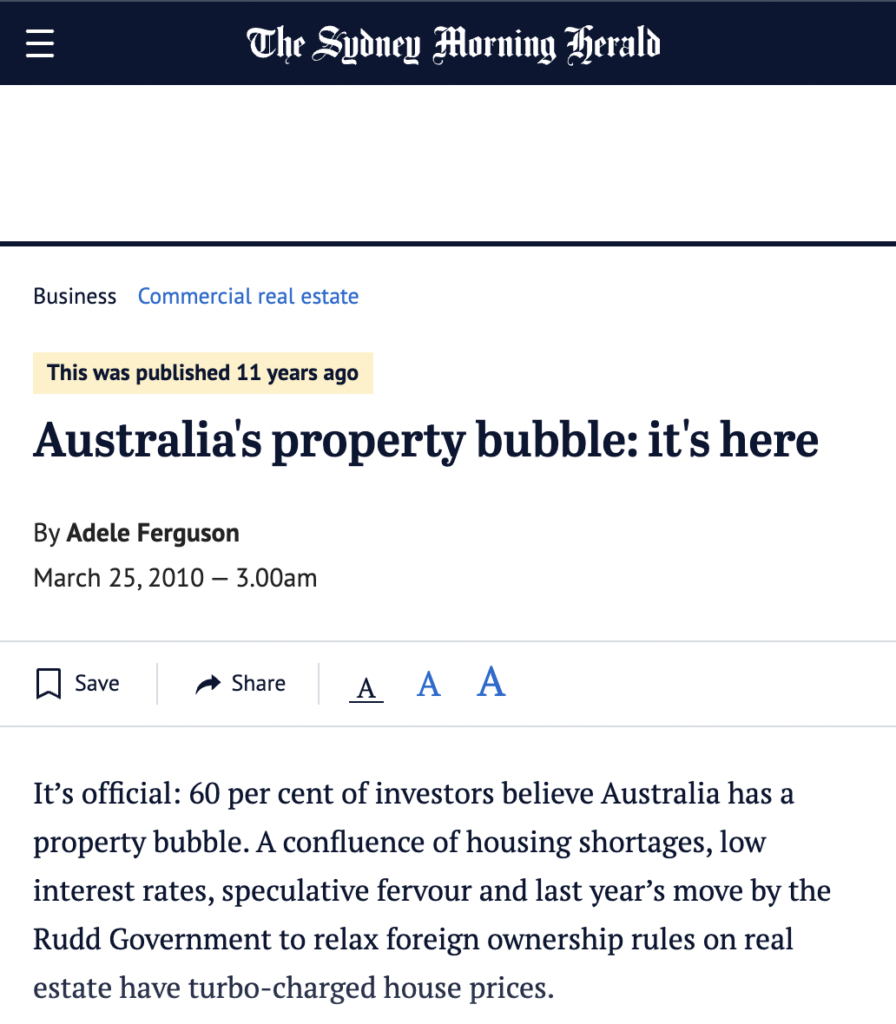
If this title sounds familiar to you is because I stole it from the SMH from March 25, 2010.

These types of news only stop the first time investors or people that have never made a move and now they use it as excuse to see what’s going to happen.


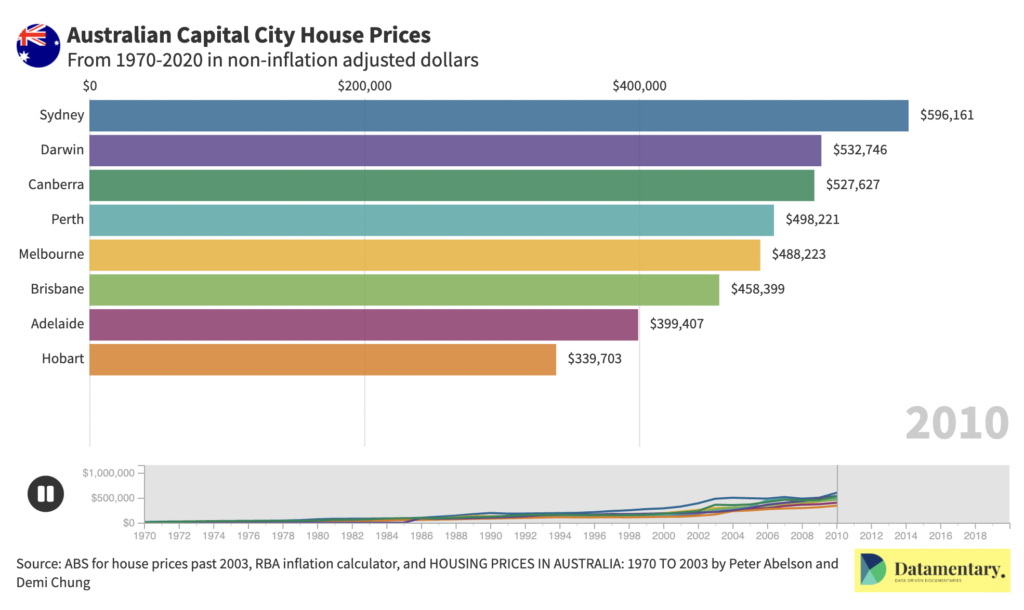
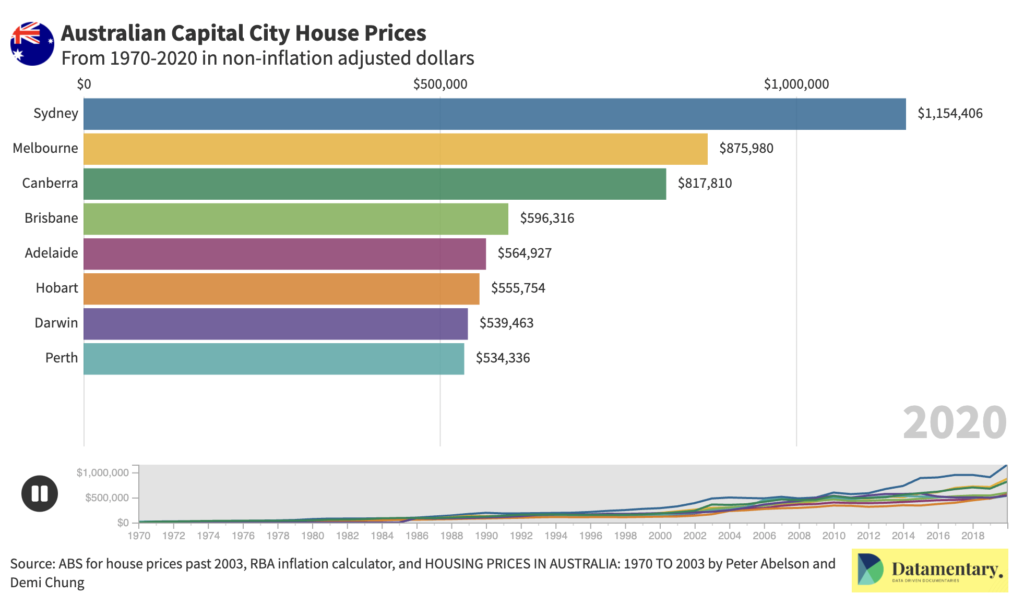
Well, what did actually happen?

As you can see no crash has happened and these numbers stop at 2020 as 2021 is not over yet.


Having said that we had one of the strongest property seasons ever seen and prices instead of dropping by 20% as predicted last year by so many called Economist.

The sad part about all this is that people listen to the wrong advice when comes to invetsment.


They go to the media or they go ask their friend that has never bought an asset in their lives but is an expert in waiting for the "right time to buy".


A lot of people that could have bought earlier than they did were stopped by news written by people that all they want is sell doom and gloom.


How many times do you see a reporter spend time writing a story about ordinary successful people that simply bought when the time was write for them?


In the property market the only people that lose are the ones that are after the quick buck, the ones that sell their property as soon the property appreciates in value.


They forget about Agent fees, Stamp duty, LMI, Removalist, opportunity cost...


Property is an asset that you buy for the long term. It's an asset that has much higher chances of appreciating than the money you park at the bank doing nothing for you.


People forget that while their money at the Bank is returning them a safe 1% per annum it gets completely offset by 3% per annum inflation rate.


Our money in form of cash is worth less and less, so honestly what do you have to lose more?


Get in touch and let's have a talk to see how can I help.

share to

By Pina Brandi December 10, 2025
Around 2017–2018, growth stalls and dips modestly after APRA’s investor growth cap (2014) and interest‑only cap (2017), which is the effect you’re asking about.
By Pina Brandi December 1, 2025
Melrose Park’s transformation from an industrial precinct into a residential and mixed-use community has been a strategically significant shift for Sydney’s urban future. Historically, the area was home to pharmaceutical and light-industrial operations, but over time these industries declined, consolidated elsewhere, or simply outgrew the outdated warehouses and fragmented road layout. Keeping the land zoned industrial would have meant under-utilising a large, strategically located pocket of Sydney at a time when housing demand is at critical levels. Redeveloping Melrose Park allows Sydney to introduce thousands of new homes in an inner-suburban area without pushing growth further to the city’s outskirts. With capacity for around 10,000–11,000 dwellings, plus retail, open space, a new high school and community facilities, the precinct is envisioned as a self-contained, modern neighbourhood with liveability at its core. Instead of being an isolated residential pocket, Melrose Park is being planned as a walkable, amenity-rich town centre where green spaces, urban parks, and mixed-use buildings form a cohesive and sustainable environment. Its location is one of its strongest advantages. Positioned on the Parramatta River, the suburb sits almost exactly halfway between Sydney CBD and Parramatta CBD, making it highly attractive for commuters who want balance, convenience and lifestyle. It is minutes from major employment hubs, established transport corridors like Victoria Road, and future connections that will further integrate the precinct into Sydney’s broader network. The land parcel is also unusually large and contiguous for an inner-suburban area, enabling a full masterplan rather than piecemeal development.  Overall, the shift from industrial to residential in Melrose Park wasn’t just a rezoning exercise; it was a strategic realignment of land use to meet Sydney’s changing economic, demographic, and lifestyle needs. Its prime location ensures the precinct will continue to attract demand, support growth, and deliver long-term value for residents and investors alike.
By Pina Brandi November 29, 2025
APRA has been explicit that the DTI cap is a financial‑stability tool, but it is deliberately designed not to choke off finance for new housing supply
Show More