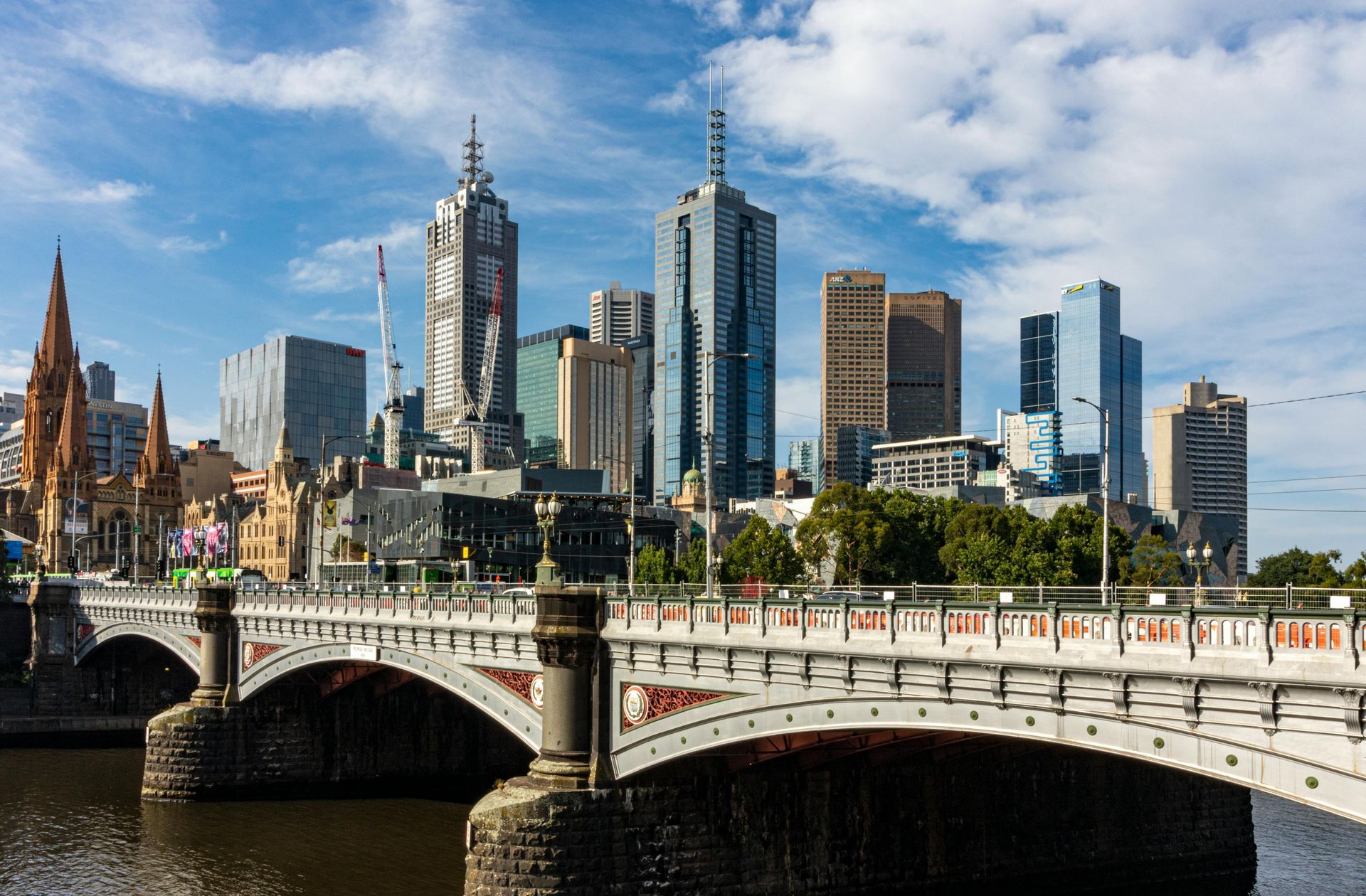
Before 2020, Melbourne was widely considered one of Australia’s strongest long-term property investment markets.
For almost two decades, Melbourne benefited from:
- massive population growth,
- strong overseas migration,
- a diversified economy,
- major infrastructure spending,
- relatively affordable housing compared with Sydney,
- and a consistent supply of renters, students and young professionals.
Investors viewed Melbourne as a “safe long-term growth city”.
Between roughly 2012 and 2020, Melbourne experienced one of the strongest housing booms in the country. Many suburbs doubled in value as migration surged and borrowing became easier during low interest rate periods.
So what changed?
The answer is not one single issue. Melbourne’s slowdown came from multiple economic, political and behavioural factors all colliding at once after 2020.
Melbourne still has strong long-term fundamentals as a global city. However, investor sentiment has clearly deteriorated compared with other Australian capitals.
Here are the biggest reasons why.

1. Massive Land Tax Increases
The most criticised decision was Victoria’s dramatic expansion of land taxes after COVID.
The Victorian Government lowered the tax-free threshold from $300,000 to $50,000 for many investors while also introducing additional land tax surcharges.
This meant many “mum and dad” investors who previously paid little or no land tax suddenly received bills worth thousands of dollars annually.
Critics argue this triggered a major investor exodus.
Industry groups and analysts warned that many landlords began selling properties or redirecting investment interstate into Queensland, WA and South Australia where holding costs were lower.
The unintended consequence?
Fewer rental properties available during an already severe rental shortage.
According to multiple reports, Victoria experienced a significant decline in rental listings while rents continued climbing.
Supporters of the policy argue investors selling to owner occupiers does not reduce total housing stock. Critics counter that not every renter is financially capable of buying, especially migrants, students and lower-income households.
2. Melbourne Lost Its Momentum After COVID
COVID hit Melbourne harder than almost any other Australian city. The city suffered some of the world’s longest lockdowns, major business disruption, population outflows, falling student numbers, and a much quieter CBD.
For years Melbourne’s economy depended on international students, migration, hospitality, office workers and inner‑city activity—much of which was upended by the lockdowns.
At the same time, remote work changed housing priorities: people moved away from small apartments near the CBD and chose larger homes in lifestyle suburbs or regional areas where affordability and space were better. That shift has particularly hurt parts of Melbourne’s apartment market.
3. Investors Began Chasing Higher-Growth States
While Melbourne was dealing with taxes and lockdown recovery, cities like:
Brisbane, Perth and Adelaide started booming.
Why?
Because they offered:
- lower entry prices,
- higher rental yields,
- stronger cash flow,
- lower holding costs,
- and stronger affordability.
In a higher interest rate environment, investors suddenly cared much more about cash flow than they did during the cheap-money years.
Melbourne’s yields became comparatively weak.
So investor capital moved elsewhere.
Property markets are heavily driven by relative attractiveness.
Once Melbourne stopped looking like the “best option”, money flowed into competing cities.
4. Apartment Oversupply Damaged Parts of the Market
Before COVID, Melbourne had a massive apartment construction pipeline.
For years, this worked because migration and student demand remained incredibly strong.
But once borders closed and population growth temporarily slowed, parts of the apartment market became oversupplied.
Some investors experienced:
- weak rental growth,
- valuation problems,
- lower demand,
- and softer resale conditions.
This created negative sentiment around Melbourne property generally, even though detached housing markets performed differently.
5. Heavy Rental Regulation Changes
Victoria introduced some of the strongest rental reforms in the country, including tighter compliance obligations and increased tenant protections.
While tenant advocacy groups supported these reforms, many landlords argued the increasing compliance burden raised costs significantly.
Combined with higher taxes, many investors concluded the risk-reward equation no longer made sense in Victoria.
The result was growing concern about “investor flight”.
By 2026, industry research found more than 80% of Victorians surveyed believed state taxes and regulations were discouraging property investment.

Property markets are heavily driven by sentiment and confidence. For years, Melbourne was viewed as Australia’s ultimate long term growth city. Investors believed demand would always remain strong and that prices would continue rising over time. After 2020, that confidence weakened significantly. Many investors began seeing Melbourne as overtaxed, overregulated and politically hostile toward property investors.
That perception matters enormously because confidence influences where investors choose to place their money.
However, saying Melbourne has “no future” would probably be an overstatement.
But Does Melbourne Really Have “No Future”?
Despite its recent struggles, Melbourne still has many long term strengths. It remains one of Australia’s largest and most important cities, with world class universities, major infrastructure projects, strong migration potential and a highly diversified economy. Historically, global cities of this size rarely remain weak forever.
The bigger question is timing.
Melbourne may eventually recover strongly if investor confidence improves, population growth accelerates again and housing supply tightens further over time. But for now, many investors continue looking elsewhere because other cities currently offer stronger cash flow, lower holding costs and better short term growth prospects.
The biggest lesson from Melbourne’s shift is that property markets are shaped by far more than just location. Government policy, taxes, interest rates, migration, supply levels, affordability and sentiment all play a major role in determining how a market performs.
And when several of those factors turn negative at the same time, even one of Australia’s strongest property markets can lose momentum for years.
But this is when you should buy and wait. Need help to get into the market? Get in touch.
share to